Question
- Junior Cert Home Economics (Common) SEC Sample Q13
- Back to the question >
Answer
(a)
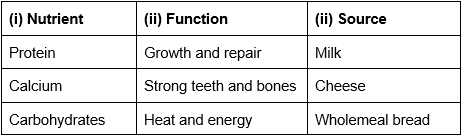
(b) (i)
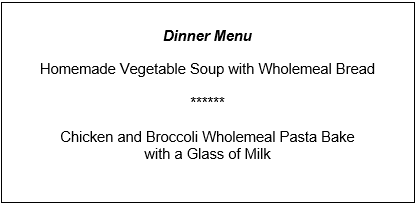
(ii) Meal planning guidelines:
- Balanced meal — this meal has at least three out of the four food groups so it is balanced. This ensures a wide range of nutrients are being consumed to meet the needs of the family.
- Children need foods that are easy to chew. Chicken, broccoli and pasta are tender and are easy for children to eat.
- Fibre — this meal contains fibre in the vegetables and the pasta. Fibre gives a feeling of fullness and prevents bowel disorders.
- Less salt — homemade soup contains less salt than packet soup. Herbs are added to the starter and main course for flavour so there is less salt in the meal.
(c)
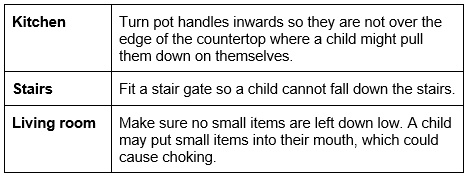
(d) (i) Ways parents/carers could increase their children’s daily exercise:
- Parents could bring their family to the local park. They could go for a walk and play in the playground together.
- Parents could walk or cycle with their children to and from school. This gives daily exercise on school days.
(ii) Benefits of having a regular family exercise routine:
- The family will be physically fit and healthy. It will help the family have a good heart rate and a healthy weight.
- Exercise is also good for mental health. It helps the family to relax and feel less stressed, which creates a nicer home environment.
(e) (i) Skills children develop through play:
- Social skills are developed through playing. Children learn how to share toys and talk to other children when playing.
- Children learn to be creative when playing and making up imaginary games.
(ii) This symbol is the Conformité Européenne mark. It shows that the toys are of a high quality and standard and that they are safe for children to play with.